


Virginia Institute of Government
See All VIG Programs
SEI: Senior Executive Institute
Image
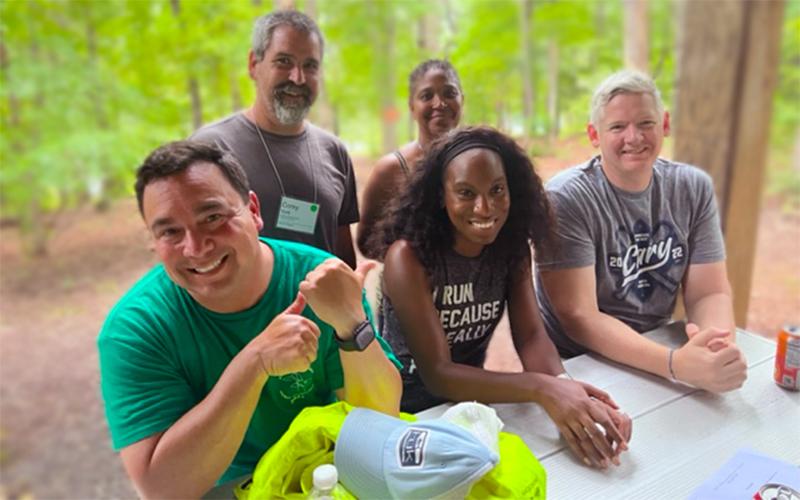
In the fast-paced world of local government, leaders need to be knowledgeable, agile, and prepared.
To take our communities confidently into the future, public leaders must adopt a proactive approach—one grounded in basic democratic values and guided by a collective vision of community-building and empowerment.
SEI offers top local government executives and department directors of large localities the strategies and hands-on techniques they need to skillfully navigate the complex and fast-changing world of local government. Our interactive and engaging two-week residential leadership program, taught in person in Charlottesville, Virginia, focuses on educating leaders and preparing them to implement what they have learned as soon as they return home.
Join Us
Apply to the Senior Executive Institute today. SEI dates for 2027 are July 18 – July 23, 2027.
Image

EXPLORE THE PROGRAM
- About
None of the ideas about leadership are really new. Our programs are special because of three things – context, environment, and connection.
The context is exclusively based in the world of local government. Instructors and facilitators are either local government practitioners (still working or recently retired) or subject matter experts that fully understand the world of local government.
There is great effort in deliberately creating a safe learning environment. This is a shared responsibility between participants, instructors, and facilitators. This environment encourages speaking up, asking for help, being candid about mistakes and failures, putting the human first over the employee, and continuous support.
Connection is at the heart of who we are as people and leaders. Work is rarely completed alone and relationships are paramount. In SEI, there is an emphasis on the strong skills needed for building and maintaining relationships. There are often lifelong connections and networks built at SEI.
What Leaders Face
The world of the public manager and leader is evolving at a speed that challenges even the most robust organizations.
- Local governments are continuously being asked to do more with less.
- Federal and state support is declining.
- Citizens are demanding a more caring, responsive government.
- New technology is revolutionizing public service.
- Dynamics and relationships with elected officials have changed.
To respond to these forces, our local governments must become laboratories for a new style of organization - one grounded in basic democratic values and guided by a collective vision of community-building and empowerment. To take our communities confidently into the future, public leaders and executives must adopt a proactive approach to change both inside the public organization and outside in the community. They must invest the time and resources required to create and maintain a continuously improving, learning organization.
- Program Design
The SEI program is a dynamic week long residential leadership program for local government executives and department directors of large localities. SEI programs consist of 35-40 participants. All classes are sponsored by the University of Virginia’s Weldon Cooper Center for Public Service and take place in-person at the Darden School of Business in Charlottesville, Virginia.
What SEI Offers
SEI programs provide local government leaders essential skills they can directly apply in their organizations to make positive change. In every SEI program, participants will
- Examine, discuss and apply the most relevant and powerful leadership practices, with focused discussions on the distinct and complex experiences of local government leaders
- Develop interpersonal skills and community and organizational leadership skills
- Leave the SEI session with a clear roadmap of the concepts learned and how they can be applied to their organizations immediately
- Develop a deeper understanding of inclusive leadership through sessions specifically focused on diversity, equity, and inclusion
- Build essential skills and awareness through team engagement. Participants will:
- reflect on key experiences, role models, and lessons learned that have shaped their leadership styles
- learn coaching techniques
- create more self-awareness and empathy by attentively listening to others' experiences and viewpoints
- explore personal values and their relationship to organizational values
- Experience a learning environment that is
- highly interactive (less than 20% lecture), engaged, and application-based, with every session including a concept to learn, a local government example, and an application exercise
- safe, supportive and built on trust and vulnerability, which allows for a nonjudgmental, open exchange of ideas and experiences
- Ideal Participant
Primary Responsibility: Stewardship of the organization and public trust
SEI is curated for senior managers and previous LEAD participants ready for the next level of development – Chief Administrative Officers (CAO’s), Deputy or Assistant CAO’s and senior department heads. These leaders have responsibility for the organization, and the community including elected officials. The curriculum meets the unique challenges of the complex roles that translate policy into operations. These leaders are often responsible for critical decision-making, managing organizational and community priorities, navigating multiple layers of change, and fostering healthy, productive work environments.
- Key Details, Fees & Cancellation Policy
The next SEI program is July 18 – 23, 2027. SEI programs enroll 35-40 participants, and all classes take place at the University of Virginia's Darden School of Business. The fee is $6,000, which includes instruction, lodging, most meals, and materials. A 10% discount is available for Virginia Institute of Government members. Payment in full is due July 1, 2027. Please contact Shirley Hamblet at smh2dr@virginia.edu, if you need to make alternate payment arrangements.
Shortly after you get your SEI welcome email, we will send you:
- Materials to help you plan your visit, including hotel and parking information; advice on getting to Charlottesville by plane, train, bus or car; and recommendations for places to visit while you are here.
- Program schedule that includes meeting times and places.
- Additional information about meals, required evening activities, and other details, like meeting etiquette, attire, as well as recommendations for getting the most out of the SEI experience.
- Pre-work to do in advance to better prepare for your experience.
Cancellation or Rescheduled Dates Policy
From the time that your participation has been confirmed via email, if you cancel more than two weeks in advance of the program start date, you will forfeit half of the tuition cost. Transferring to an alternate date does not release you from this obligation. However, to avoid any penalties, acceptable substitutions may be made with our advance approval. No refunds can be made within two weeks of the start date. We greatly appreciate notification ASAP of any need to cancel.
Join Us in 2027
Apply to the Senior Executive Institute today.
SEI dates for 2027 are July 18 – July 30, 2027.
Course Description
- Exploring the Heart & Soul of Public Service
Doug Walker, Deputy County Executive, County of Albemarle, VA
Description:
Public service is a calling. Leadership is getting people to own and mobilize around collective values. In this session, discover how powerfully public service and leadership can come together.
Learning Outcomes:
Participants will be able to:
- Explain the historical roots and civic purpose of public service, using the Athenian Oath as an example of how democratic ideals connect values, actions, and outcomes.
- Describe leadership as the work of mobilizing people around shared values and articulate why collective values are essential to effective local government at the most intimate level of democracy.
- Apply a values-to-action framework (e.g., Vision → Values → Behaviors → Outcomes / Accountability) to translate organizational ideals into observable team behaviors and measurable results.
- Analyze a local government case example (e.g., Albemarle County) to identify how shared values were operationalized through behaviors and accountability mechanisms, and the specific role middle managers played in that process.
- Demonstrate how middle managers can use values-based tools—such as an oath, shared values statements, or facilitated dialogue—to motivate teams, reinforce purpose, and strengthen alignment with organizational goals.
- Building a Healthy Workplace Culture
Kaki Dimock, Chief Human Services Officer, County of Albemarle, VA
Description:
Culture remains a key factor in work satisfaction and success. The session examines the role of vulnerability in building trust and strengthening leadership effectiveness, helping participants develop skills that improve communication, collaboration, and team dynamics. Additionally, leaders must be able to manage emotions to achieve better results in relationships as well as goals. Successful leaders leverage this knowledge to achieve greater leadership impact.
Learning Outcomes:
Participants will be able to:
- Increase their understanding of culture and why it is important
- Increase their understanding of policy/procedure impediments to healthy culture
- Recognize and accurately interpret emotions in others, including verbal and non-verbal cues, to improve understanding and connection.
- Apply empathy in workplace interactions, balancing awareness of others’ perspectives with accountability and performance expectations.
- Use emotionally intelligent communication skills to navigate difficult conversations, conflict, and feedback constructively.
- Strengthen relationships through social awareness, fostering trust, psychological safety, and collaboration across diverse teams.
- Apply emotional intelligence to leadership and influence, adapting style to meet the needs of individuals, teams, and situations.
- Psychological Safety
Molly Harlow, VIG Assistant Director – Leadership Development
Description:
Psychological safety is defined as “a belief that one will not be punished or humiliated for speaking up with ideas, questions, concerns, or mistakes” and as “an environment of rewarded vulnerability”. The 4 Stages of Psychological Safety model is explored along with behaviors that build psychological safety. Create a plan to apply psychological safety to your leadership role.
Learning Outcomes:
Participants will be able to:
- Define psychological safety and explain why it is critical to individual well-being, team effectiveness, and organizational performance.
- Describe the relationship between psychological safety and a positive work culture, including how trust, respect, and accountability reinforce one another.
- Identify the costs of low psychological safety (e.g., silence, disengagement, errors, turnover) and the benefits of high psychological safety (e.g., learning, innovation, performance).
- Explain the Four Stages of Psychological Safety and how they build progressively within teams and organizations.
- Describe the purpose and characteristics of each stage:
- Inclusion Safety
- Learner Safety
- Contributor Safety
- Challenger Safety
- Identify specific behaviors that support each stage of psychological safety, recognizing how leadership actions and team norms influence safety levels.
- Select and prioritize behaviors that can create or strengthen each stage of psychological safety within their own team or work environment.
- Develop an implementation plan to apply chosen behaviors in the workplace, including practical next steps and accountability considerations.
- Leaders Build Culture Through Engagement, Delegation and Coaching
Nancy Olivo PhD, IPMA-SCP, Organizational Performance Manager, City of Hampton, VA
Description:
Using the latest research on employee engagement and David Marquet’s approach for turning followers into leaders, participants will develop action steps for applying these concepts to their work as leaders. Content includes: expanding knowledge and tools to enhance engagement; discovering how to use clarity and competence to create leaders at every level; using a coaching process and 4 core skills to develop employees, improve their performance and assist them to think strategically.
Learning Outcomes:
Participants will be able to:
- Explain the impact of employee engagement on attraction, retention, and performance, particularly in the context of today’s global workforce challenges.
- Identify key drivers of employee engagement, including the eight focus areas that organizations can influence to enhance engagement.
- Recognize generational differences in engagement expectations and describe strategies for engaging employees across multiple generations.
- Apply intrinsic motivation principles, drawing on the work of Daniel Pink, to increase engagement and discretionary effort in the workplace.
- Assess their own workplace culture, identifying strengths and opportunities for creating or sustaining a culture of engagement.
- Explain the coaching process and its role in improving engagement, performance, and accountability.
- Conduct a structured coaching conversation, using a conversation guide informed by Ken Blanchard’s coaching principles.
- Explain how clarity and competence enable effective delegation, allowing leaders to safely push authority to where the information exists.
- Apply delegation tools to identify opportunities to push decision-making authority closer to frontline employees.
- Develop actionable strategies to enhance engagement and leadership within their own teams or organizations.
- Leadership Communication: How to Tackle Challenging Conversations
Karen Conrad, M.Ed., Karen Conrad and Associates, LLC and Antoinette Allen,
PH.D., Chief Storyteller and Founder of Two Cups of TLC, LLCDescription:
Leaders must be able to effectively engage in conversations that are respectful. This requires leaders to understand their own perspective and the perspective of others without judgement. This session offers participants the opportunity to explore crucial conversations skills and practice having difficult conversations using a 5-step model which could expand their own mindset. This expansion benefits the leader, their team, and their organization.
Learning Outcomes:
Participants will be able to:
- Demonstrate increased self-awareness of personal perspectives and assumptions, recognizing how these influence interactions and decision-making.
- Recognize and value multiple perspectives by engaging in conversations that are inclusive, respectful, and free from judgment.
- Identify both the strengths and challenges of encouraging diverse viewpoints within teams and organizations.
- Apply crucial conversation skills to navigate emotional, sensitive, or controversial topics constructively.
- Use a five-step equity-based conversation model to structure and guide difficult or high-stakes conversations.
- Contribute to an inclusive workplace culture by modeling respectful dialogue, curiosity, and accountability.
- Develop a personal conversation strategy for engaging in challenging discussions that promotes understanding, psychological safety, and equity.
- Leading Change
Description:
This session is designed to enhance leaders’ understanding and abilities to more effectively lead change and transition among employees and teams. The session specifically focuses on the interpersonal dynamics related to organizational change, as well as providing information and skills related to understanding and leading teams effectively through the organizational change and transition process.
Learning Outcomes:
Participants will be able to:
- Explain why change is difficult for individuals and organizations, including common emotional, cognitive, and systemic barriers.
- Recognize typical reactions to change, such as doubt, resistance, and uncertainty, and describe effective leadership responses to each.
- Demonstrate strategies for leading through uncertainty, maintaining credibility, clarity, and trust during periods of change.
- Apply a practical change leadership tool from Switch to diagnose and address change challenges.
- Articulate their leadership essence, identifying core values, strengths, and behaviors that support effective change leadership.
- Use the ADKAR change model to plan and guide change initiatives, addressing Awareness, Desire, Knowledge, Ability, and Reinforcement.
- Connect purpose to change efforts, clearly explaining the “why” behind change to increase understanding, engagement, and commitment.
- Integrate multiple change tools (Switch, leadership essence, ADKAR, and purpose) into a cohesive approach to leading change.
- Develop a personal or organizational change leadership plan, applying session tools to a real or anticipated change initiative.
- Presentation of Documentary, Raised/Razed
Andrea Douglas, Executive Director, Jefferson School
Description:
Raised/Razed dives deep into Charlottesville, VA’s oldest African American neighborhood, charting the lives of residents as they faced discriminatory policies and a city government that saw them as the only thing between it and progress. Learn the hard truths of the federal Urban Renewal program, and the broader history of its effect in Durham, NC and other communities across America.
Learning Outcomes:
Participants will be able to:
- Explain why raising awareness is a necessary first step for meaningful change, particularly in identifying and addressing disparities within communities.
- Recognize how disparities can remain invisible without intentional examination of history, data, policies, and lived experience.
- Describe the historical role of local government in shaping community outcomes, including both intended and unintended consequences of past decisions.
- Analyze how historical policies and practices contribute to present-day inequities, using local government actions as a lens.
- Examine the Charlottesville–Durham case study, identifying parallels and lessons that are transferable to other localities and governance contexts.
- Identify patterns of systemic impact related to land use, housing, infrastructure, and public decision-making that affect marginalized communities.
- Reflect on the responsibility of today’s local government leaders, considering how awareness of the past informs more equitable decision-making in the present and future.
- Apply historical insight to current leadership practice, identifying opportunities to reduce disparities and create better outcomes for all community members.
- Leading Teams
Kristy Shifflett, Chief Operating Officer, County of Albemarle, VA
Description:
This program explores how the Five Dysfunctions of a Team—absence of trust, fear of conflict, lack of commitment, avoidance of accountability, and inattention to results—affect team effectiveness and meeting performance. Participants learn to recognize early warning signs of dysfunction, understand how meeting dynamics influence team outcomes, and apply practical strategies to build trust, encourage healthy conflict, strengthen accountability, and align meetings with organizational priorities. Using the Five Dysfunctions framework as a diagnostic tool, leaders develop skills to foster productive dialogue, improve decision clarity, and ensure meetings advance meaningful results.
Learning Outcomes:
Participants will be able to:
- Describe the Five Dysfunctions of a Team—absence of trust, fear of conflict, lack of commitment, avoidance of accountability, and inattention to results—as outlined in The Five Dysfunctions of a Team and how to overcome these “Dysfunctions” utilizing the skills and practices of a highly functional team
- Explain how each dysfunction impacts team performance, decision-making, morale, and organizational outcomes and methods/skills to positively impact each of these outcomes.
- Recognize early warning signs of team dysfunction, particularly as they show up in meetings, communication patterns, and follow-through.
- Explain the relationship between team dysfunction and ineffective meetings, including how lack of trust, conflict avoidance, and unclear commitment undermine meeting effectiveness.
- Identify and be able to discuss characteristics of effective meetings, including clear purpose, appropriate participation, healthy debate, decision clarity, and accountability allowing for organizational culture differences.
- Distinguish between productive conflict and unproductive tension and how this may look different for different organizations and explain why healthy conflict is necessary for strong decisions and engagement.
- Assess their team’s current level of effectiveness, using the Five Dysfunctions framework as a diagnostic tool.
- Apply strategies to build trust and encourage open dialogue within teams and meetings.
- Use meeting practices that promote commitment, such as clarifying decisions, defining next steps, and ensuring shared understanding.
- Strengthen accountability through meeting structure, including peer accountability, clear ownership, and follow-up mechanisms including electronic/software tools that are proving effective for accountability management in organizations, e.g. dashboards, project management tools, etc.
- Align meetings to team and organizational results, ensuring time spent together advances priorities rather than consumes capacity.
- Stress Management and Work-Life Integration
John H. Whitlow, Ph.D., JHW Consulting Services and Marc Carraway, Scuffletown Consulting, LLC
Description:
This program helps leaders explore the difference between work-life balance and work-life integration and develop practical strategies to manage stress and sustain well-being in demanding environments. Participants learn tools such as mindfulness, the Let Them Theory, and the Circle of Control, Influence, and Concern to better manage priorities and maintain perspective. The session also examines how false urgency cultures contribute to burnout and equips leaders with strategies to create healthier, more sustainable approaches to work while staying focused on purpose and impact.
Learning Outcomes:
Participants will be able to:
- Increase their understanding of the difference between balance and integration
- Learn and apply strategies for stress management and work-life integration to include:
- Mindfulness
- Let Them Theory
- Circle of Control, Circle of Influence, Circle of Concern
- Perspective, Gratitude and Purpose
- Increase their understanding of strategies to mitigate and prevent burnout
Our Lead & SEI Instructors
Meet Our Leaders of Practice