


Our History
About the Cooper CenterTracing its history back as far as 1931, today’s Weldon Cooper Center for Public Service weaves together services provided over the past eighty years, under the names of various bureaus and institutes, to local and state government officials and citizens of the Commonwealth. These entities came together in 1987 as the University of Virginia’s Center for Public Service, which was later named in 1994 after Weldon Cooper.
The Bureau of Public Administration/Institute of Government
On July 1, 1931, in an effort to help the state’s cities and towns deal with the effects of the Great Depression, the University of Virginia joined forces with the Virginia Municipal League to create the Bureau of Public Administration. In its first years, the Bureau of Public Administration focused on providing services, such as consulting and technical advice to local governments, and on helping public officials apply an analytical approach to public policy decisions. The Bureau soon enlarged that mission to conducting original research that would benefit a broad cross-section of localities, as well as the state government.
In 1964, the Bureau’s name was changed to the Institute of Government, and, in 1969 was reorganized into three divisions: 1) urban research, 2) governmental and administrative research, and 3) training services.
The Bureau of Population And Economic Research/Tayloe Murphy Institute
Also in the first few decades of the 20th century, population and economic research for the state was carried out under the auspices of the Virginia State Planning Board. In 1944, the population study working group of the planning board was moved to the University of Virginia and renamed the Bureau of Population and Economic Research.
In 1972, the Bureau was merged with the Tayloe Murphy Institute – at the time a business study center of the University.
The Center for Public Service/Weldon Cooper Center
In 1987, the economic and demographic study centers of the Tayloe Murphy Institute merged with the Institute of Government to become the University of Virginia’s Center for Public Service. In 1994, the Board of Visitors of the University renamed the center the Weldon Cooper Center for Public Service in recognition of Weldon Cooper’s many accomplishments and service to the Commonwealth and the University.
Since 1994, the Weldon Cooper Center has diversified and expanded its programs and research offerings, including:
- In 1988, adding leadership training programs and providing an administrative and operational home for the University Internship Program (moved to Career Services in 2017)
- In 1991, having a hand in creating, and becoming the home for, the Virginia Institute of Government to provide strategic and technical advice and training to local government officials
- In 1993, becoming home to the Sorensen Institute for Political Leadership
Cooper Center Leadership
Over the years of its development, the Cooper Center and those it serves have benefitted from the scholarly expertise and public service commitment of many leaders, including:
Bureau of Population and Economic Research
Lorin A. Thompson, Director
Institute of Government
Weldon Cooper, Director (1956-1973)
Tayloe Murphy Institute
Charles O. Meiburg, Director
James C. Dunstan, Director
Center for Public Service/Weldon Cooper Center
James A. “Dolph” Norton, Director
Carl Stenberg, Director
John Garland, Director
John P. Thomas, Director
Meredith Gunter, Interim Director
Larry D. Terry II, Director
Biography of Weldon Cooper
Weldon Cooper, a native of Kirbyville, Texas, joined the University of Virginia faculty in 1947 as the associate director of the Institute of Government. Mr. Cooper was named director of the Institute in 1956 and served in that capacity for 17 years. During his tenure, Mr. Cooper helped guide numerous state commissions, including the Governor’s Commission on Legislative Redistricting in 1961 and the Virginia Metropolitan Areas Study Commission in 1966. He helped draft or revise numerous municipal charters and regularly assisted legislators and government officials on questions of public administration. In 1955, as a special consultant, he helped the Alaska Constitutional Convention draft a charter for the 49th state. He wrote several books and two dozen articles on Virginia.
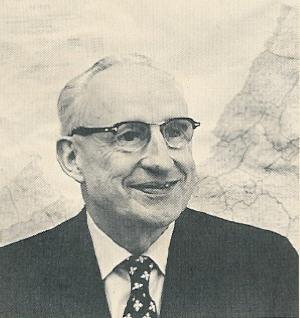
Mr. Cooper was secretary to the Board of Visitors and an adviser to University presidents Colgate Darden, Edgar F. Shannon Jr., and Frank Hereford Jr. He also was executive assistant to Gov. John S. Battle in 1950 and 1951. Mr. Cooper retired from the University of Virginia in 1973.
In 1994, the Board of Visitors renamed the Center for Public Service, the Weldon Cooper Center for Public Service, honoring Mr. Cooper’s service to the Commonwealth and the University of Virginia.
“Weldon Cooper was dedicated to the state of Virginia as an effective public servant and to the University of Virginia as a scholar and thoughtful leader,” said former UVA President John T. Casteen III. “He set out to make Virginia better and he succeeded. For that he will be remembered.”
Mr. Cooper died in 1996 at age 89.